The most suitable combination of assessments can be recommended
Tools
There are hundreds of assessment tools on the market
Compliance
The best assessments will be used, to ensure legal compliance
Making use of psychometric assessments
In your selection process can make the process highly objective, increasing the likelihood of selecting the right candidate every time
Hiring the wrong person
Can have huge cost implications for your organisation, which may include:
High staff turnover
Reduced effectiveness
High training costs
Repeat recruitment costs
Psychometric assessments
Helps to make the hiring of staff more accurate with the objective to:
Reduce costs
Increase productivity
Suitable placement
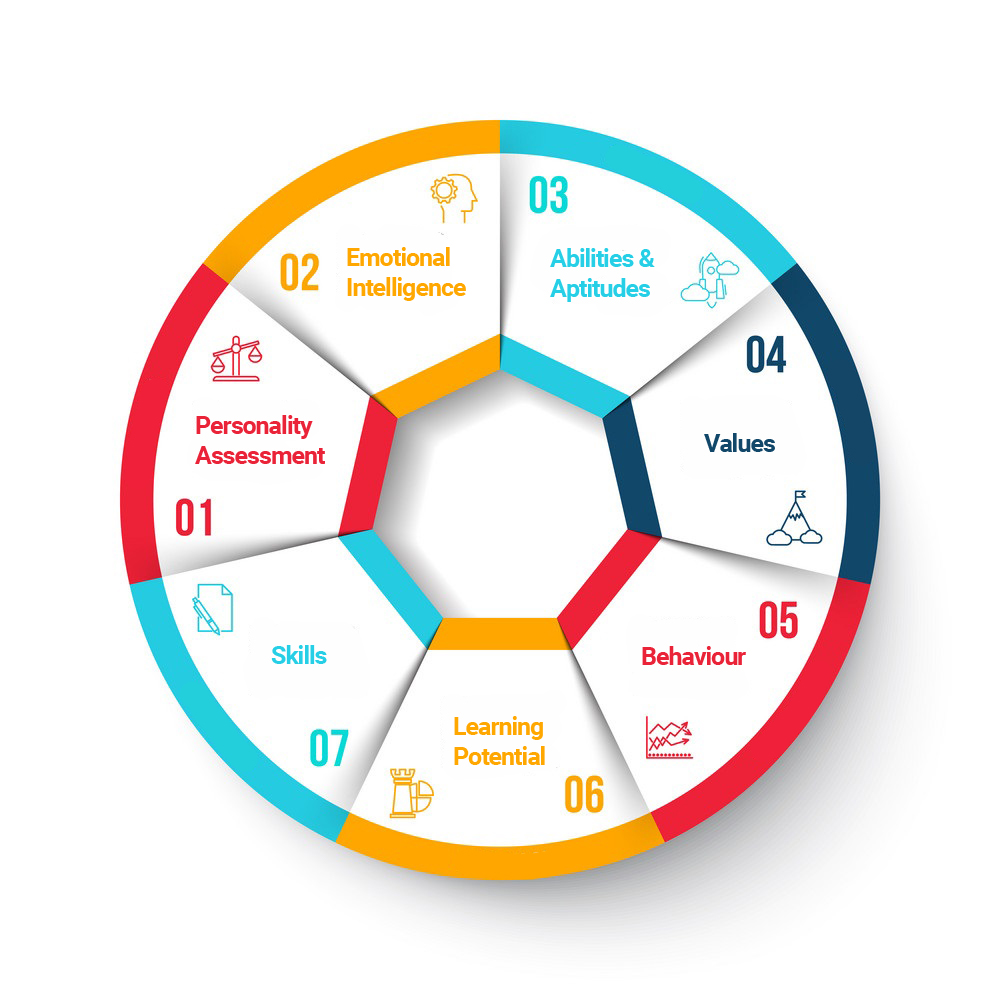
Personality Assessment
It is key to compare the personality traits or preferences of a candidate with those which are deemed to be essential for the role in order to determine suitability for the role.
Emotional Intelligence
This is important in roles where it is essential to both manage own emotions as well as to be able to understand and manage the emotions of others.
Abilities and Aptitudes
The assessment of a candidate’s capabilities within a defined area of competence. This may include cognitive ability, logical reasoning, verbal ability etc.
Values
It is essential to determine whether the values held by an individual are in line with those of the organisation to ensure a good person- organisation fit. Motives can also be assessed to see if the person is right for the organisation (e.g.: motivated by monetary benefits for a sales role)
Behaviour
Observation of behaviour through exercises such as presentations, role-plays or in-basket exercises may give an indication of the likely behaviour of the candidate in the workplace and may assist in backing up the results of the assessments.
Learning Potential
The concept of what it means to be intelligent varies across different contexts and cultures, but the term ‘high learning potential’ most often refers to an ability to understand information well, make quick analyses and use memory capacity to learn quickly.